Homestead Basics
What a Texas homestead is, who may qualify, and how the protections work for urban and rural property owners alike.
Learn the basicsPlain-language guidance on Texas homestead protections, property tax exemptions, county resources, land issues, and the laws that shape home, land, and legacy.
Educational information only. Not legal, tax, financial, or real estate advice.Texas homestead law touches more than a house. It shapes property taxes, creditor protections, surviving spouses, heirs, rural land, and the ability of Texans to protect what they have built.
Most Texans never think about homestead law until something forces them to — a tax bill, a death in the family, a creditor's letter, a proposed transmission line. By then, the questions are urgent and the answers feel out of reach.
Each one is written in plain language, built on official sources, and made to be read before you need it.
What a Texas homestead is, who may qualify, and how the protections work for urban and rural property owners alike.
Learn the basics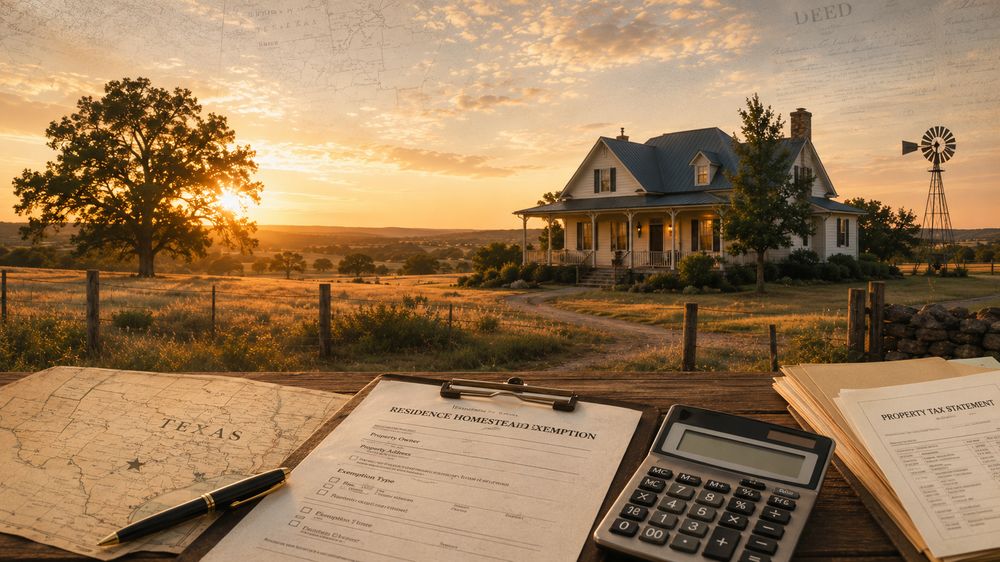
General residence, over-65, disability, disabled veteran, and surviving spouse exemptions — plus the deadlines that govern them.
See exemptionsHow homestead protections meet creditors, forced sales, heirs, probate, divorce, and the transitions families face over time.
Understand protectionStatewide rules, local practice. Find your appraisal district, tax assessor-collector, county clerk, forms, and deadlines — for all 254 counties.
Find your countyWater rights, eminent domain, reservoirs, solar, data centers, and the development pressure reaching Texas land.
Explore land issuesHomestead law is statewide. The paperwork is local. Three steps keep you on solid ground.
Start with what Texas law actually says — the constitutional protections, the Property Code, and the Tax Code sections that define a homestead and its exemptions.
Forms, filing windows, and local practice live with your appraisal district and county offices. Confirm every detail with them before you act.
Keep the link, the form number, and the date you checked. When questions come back years later, the source is what protects you.
This site is an educational resource, not a law firm. We summarize what official Texas sources say, link back to them, and note when we last reviewed each page — so you never have to take our word for it.
Texas law carries specific protections for surviving spouses — both for property tax exemptions and for the home itself.
Read the guideOne of the homestead's oldest purposes is shielding the family home from many creditors' forced sales — strong, but not unlimited.
Read the guideWhat happens to the homestead when it passes to the next generation — and how heir property works for Texas families.
Read the guideHomestead rules are statewide, but the offices, deadlines, and paperwork you actually use are local. Look up the official appraisal district, tax assessor-collector, and county clerk for any of the 254 Texas counties.
Appraisal Districts Homestead Forms County Clerks
County links are provided for educational convenience. Always verify forms, deadlines, and requirements with your county appraisal district.
A plain-language watchlist of Texas bills that could affect homestead rights, property taxes, deeds, and rural land — each with status and sources.
See the watchlistNow law: what Texas's deed-fraud law changed, why county deed records matter, and the practical steps homeowners and heirs can take.
Read the guideA permanent, plain-English record of what became law, what was vetoed, and what did not pass — with every measure labeled by its verified final status.
Open the archiveThe sources we watch, how bills are selected, and how we separate passed law from pending proposals — so you can verify everything yourself.
See how it worksA once-a-month, plain-language update on homestead rights, property taxes, land, legacy, and important source changes.
Never required to read anything or download any resource. One email a month. Unsubscribe anytime.