Solar, Data Centers, Reservoirs & Rural Land
New demand on Texas land and the grid raises fresh issues for rural families and communities.
New demand on Texas land and the grid raises fresh issues for rural families and communities.
Texas has always grown. Roads, railways, power lines, reservoirs, pipelines, cities, farms, ranches, and neighborhoods have all shaped the state over time.
Growth itself is not the problem.
The harder question is whether growth is happening with enough transparency, respect for landowners, water planning, and protection for the families whose land, homes, and communities are affected.
Today, rural Texas is facing a new kind of pressure. Solar projects, data centers, transmission lines, reservoirs, water infrastructure, and large-scale industrial growth are changing the way families think about land. For some landowners, these projects may create opportunity. For others, they may create uncertainty, conflict, or fear of losing land that has been in the family for generations.
This topic belongs in a Texas homestead conversation because homestead law is ultimately about the home place. It is about the land, the family, the roof, the legacy, and the legal protections Texans should understand before pressure arrives.
This is not an anti-growth conversation
Texas Homestead Law supports responsible growth, innovation, energy development, water planning, and technological advancement.
This is not about being against solar energy. It is not about being against artificial intelligence. It is not about being against reservoirs, infrastructure, or economic development.
It is about asking better questions before rural landowners, farmers, ranchers, heirs, and surviving spouses are asked to sign documents, accept offers, grant easements, lease acreage, relocate, or give up rights they may not fully understand.
A healthy Texas future should not require rural families to be left in the dark.
Why rural land is under new pressure
Rural land is often where large projects go because it offers space.
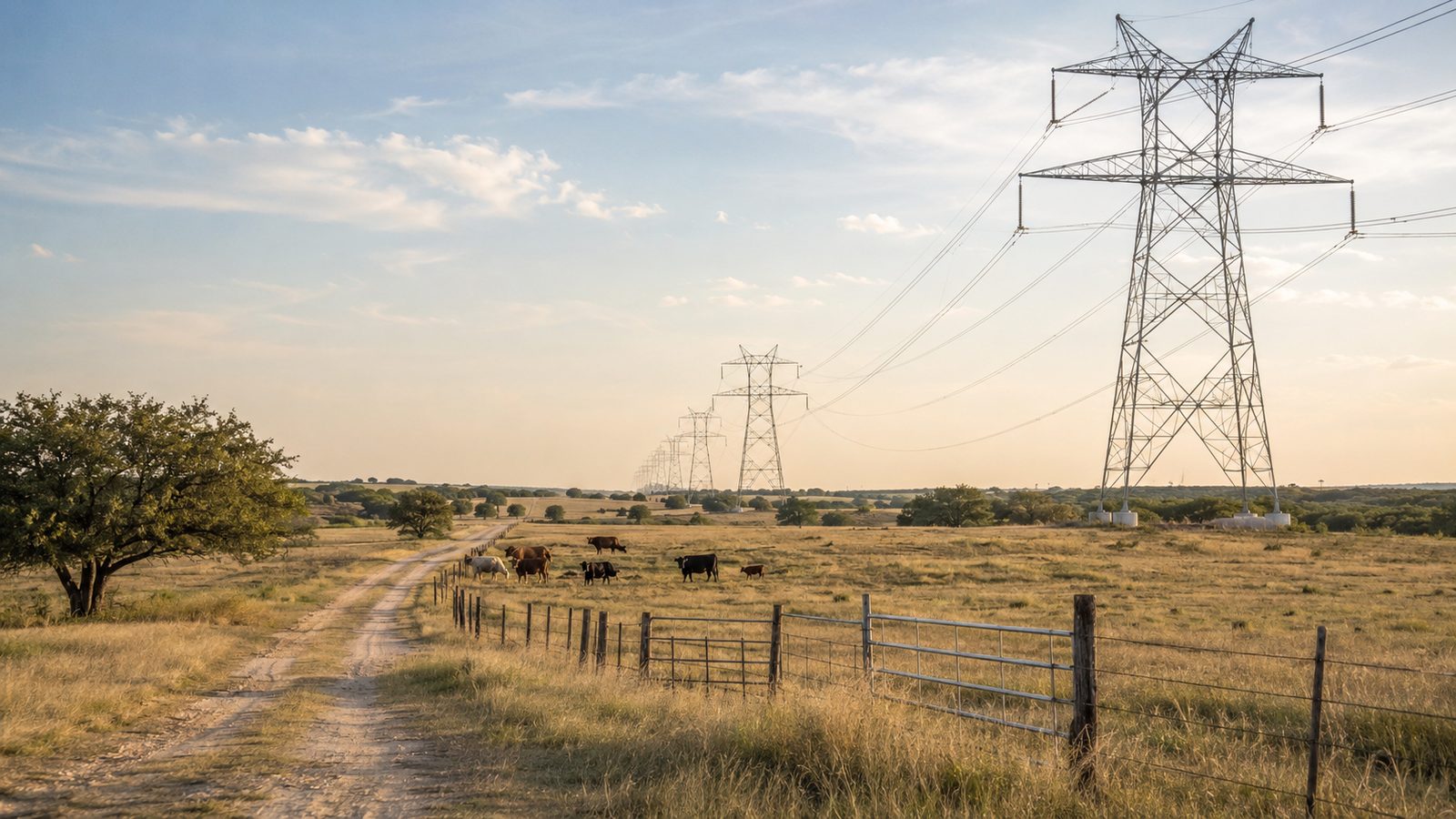
Solar developers need acreage. Data centers need power, water, fiber, and land. Reservoirs and water projects may require land acquisition, easements, relocation, or long-term changes to communities. Transmission lines may cross farms and ranches to move electricity from where it is generated to where it is needed.
Each project may have a different purpose. Each may be lawful. Some may bring revenue or public benefit. But each can also affect the people living closest to the land.
The impact may include:
- loss of productive agricultural land;
- long-term lease obligations;
- changes to access roads, gates, fences, and drainage;
- transmission line easements;
- noise, lighting, traffic, or construction impacts;
- water demand or water transfer concerns;
- property tax and appraisal questions;
- pressure on heirs or older landowners;
- uncertainty about future use of family land.
These issues are not always visible from a statewide planning map. But they are very visible to the family whose pasture, field, road frontage, well, pond, or homestead is involved.
Solar projects: opportunity and caution
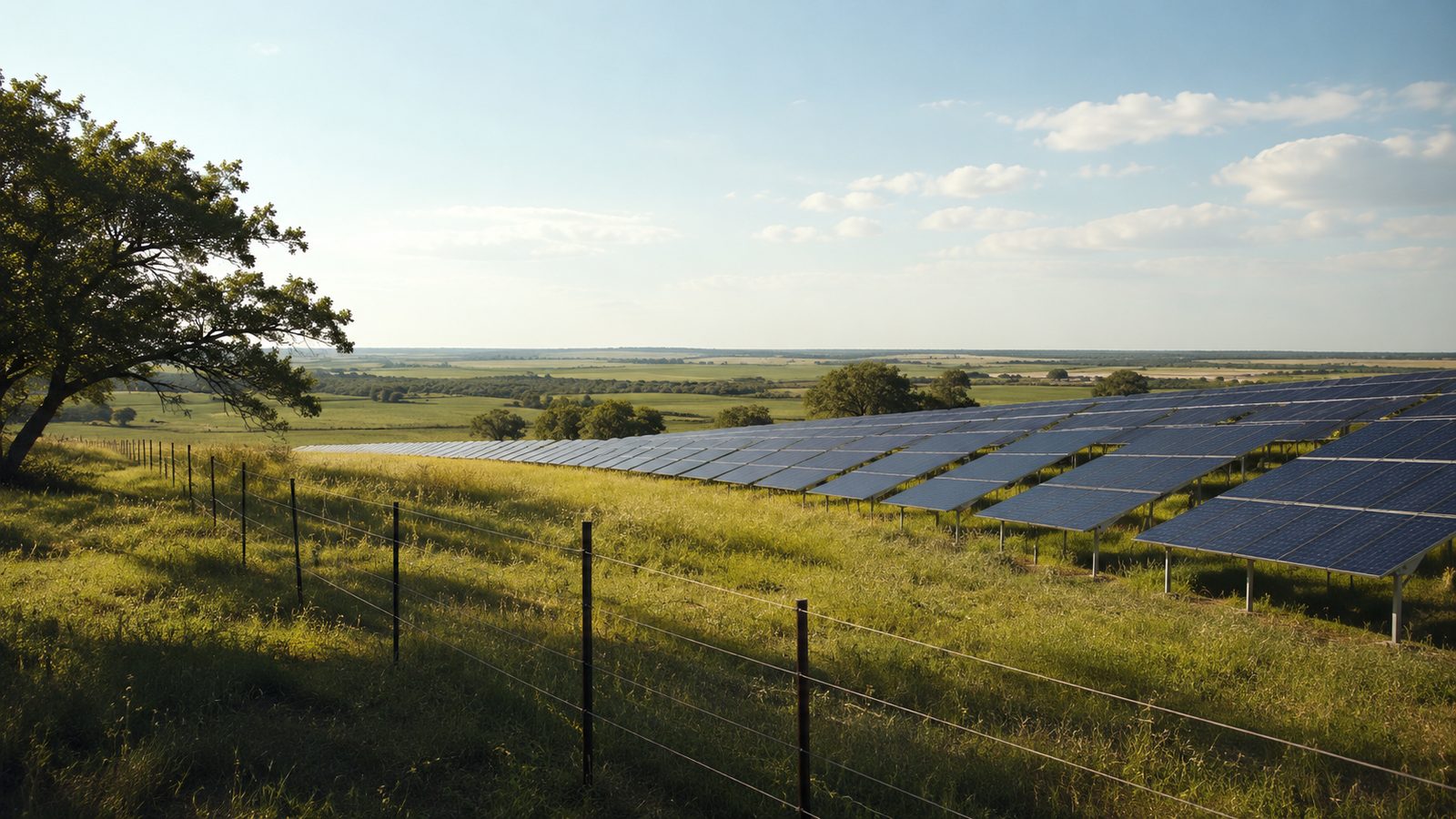
Solar leases can provide income for landowners. For some families, that income may help preserve ownership of land that would otherwise be difficult to keep.
But solar leases are serious legal documents. They may last for decades. They may limit how land can be used. They may affect farming, grazing, hunting, access, drainage, taxes, future sale, inheritance planning, and restoration of the property after the project ends.
A landowner should not treat a solar lease like a simple rental agreement.
Before signing, landowners should understand:
- how long the lease lasts;
- whether the developer has an option period before operations begin;
- how payments are calculated;
- who pays property taxes or rollback taxes, if any;
- who maintains fences, roads, gates, and drainage;
- whether the land can still be used for grazing, agriculture, or hunting;
- what happens if the project is sold to another company;
- who is responsible for removing equipment;
- whether financial security exists for cleanup and restoration;
- how the lease affects heirs, lenders, or future buyers.
A solar project may be a good decision for some landowners. But it should be an informed decision, not a rushed one.
Data centers: water, power, and transparency
Data centers are becoming a major part of the Texas growth conversation.
They support cloud computing, artificial intelligence, digital services, and modern infrastructure. These technologies matter. They can support innovation, health care, education, business, and public services.
But data centers can also require major electricity and water planning. Their impacts are not always obvious to nearby residents until a project is already moving forward.
For rural communities, the questions are practical:
- How much electricity will the facility require?
- Will new transmission infrastructure be needed?
- How much water will be used?
- Will water come from local groundwater, surface water, municipal supply, recycled water, or another source?
- Will the project affect nearby wells, agriculture, or drought planning?
- What tax incentives are being offered?
- What public reporting is required?
- Who is responsible if projected water or power use changes?
The concern is not that data centers exist. The concern is whether communities have enough reliable information to understand the tradeoffs.
Reservoirs and water projects: public need and private burden
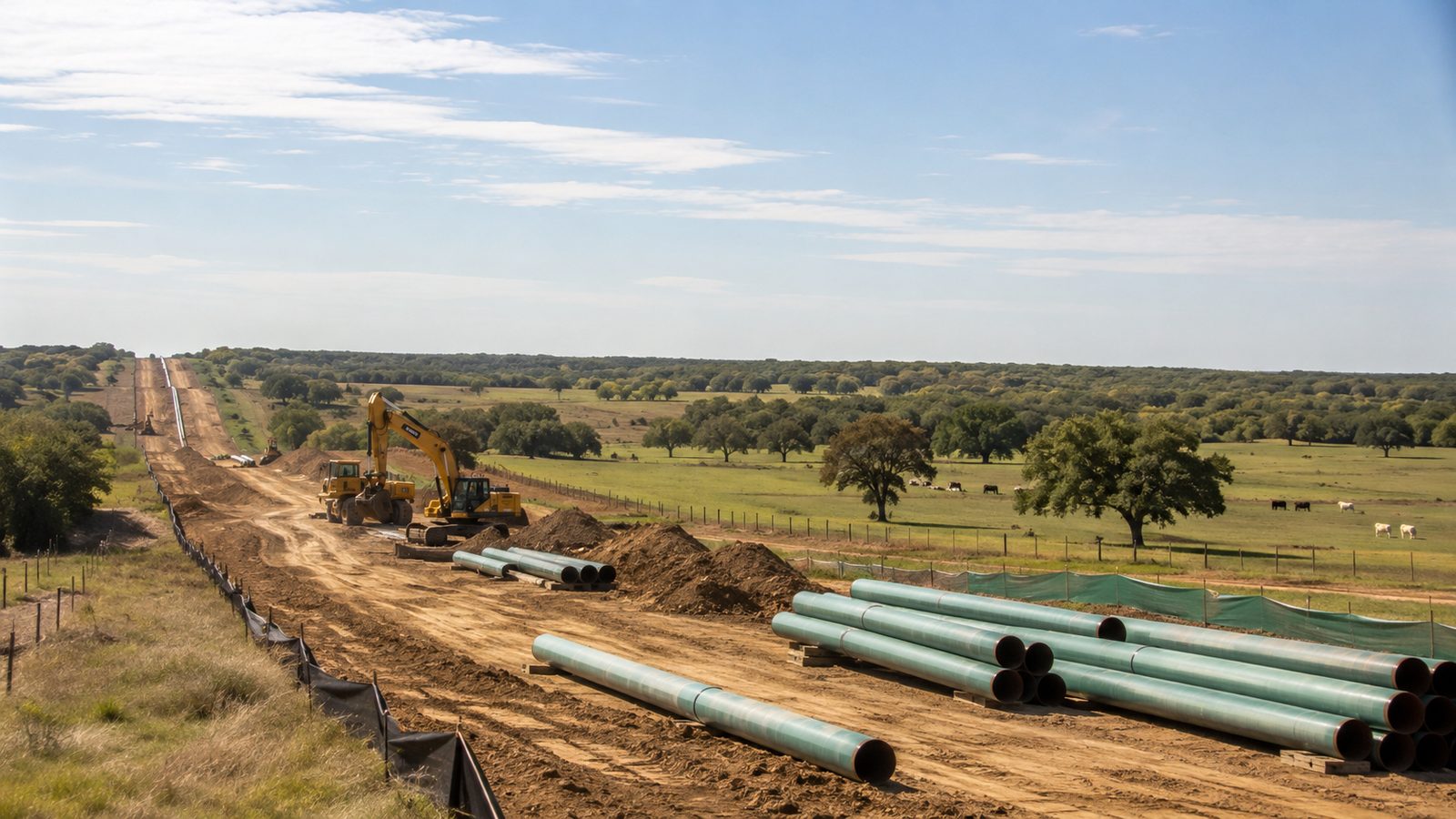
Water planning is essential in Texas. Drought, population growth, agriculture, industry, and municipal demand all require serious long-term planning.
Reservoirs and water infrastructure may be proposed to serve regional or statewide needs. But when a reservoir or water project affects private land, the public need can become a very personal burden.
A landowner may face surveys, acquisition offers, easement requests, relocation questions, or condemnation proceedings. A community may wonder whether the water will serve local families or be moved elsewhere. Farmers and ranchers may worry about losing productive land to supply water for distant growth.
Those are fair questions.
Water matters. So does the land being asked to carry the cost.
Homestead protection does not answer every land question
Texas homestead law is strong, but it does not stop every kind of land pressure.
A homestead may be protected from many ordinary creditor forced sales. A residence homestead exemption may reduce property taxes. A surviving spouse may have rights connected to the home. Rural acreage may receive special treatment under homestead law.
But homestead protection does not automatically prevent:
- eminent domain;
- voluntary sale;
- voluntary leases;
- properly created easements;
- utility routing decisions;
- reservoir acquisition;
- valid tax foreclosure;
- valid mortgage foreclosure;
- long-term contracts signed by the owner.
That is why education matters. A family may have homestead rights and still need legal help before responding to a project, offer, lease, easement, or condemnation notice.
Questions rural landowners should ask before signing anything
Before signing a lease, option, easement, purchase agreement, right-of-entry form, survey permission, or settlement document, landowners should slow down and ask:
- Who is asking for access to the land?
- Is this a private company, public entity, utility, water district, developer, or contractor?
- Does the entity have eminent domain authority?
- Is the document temporary or permanent?
- Does it affect only part of the land or the entire tract?
- Does it affect the homestead, access to the homestead, wells, roads, fences, gates, barns, ponds, or livestock?
- Are damages to the remaining property included?
- Are future owners and heirs bound by the agreement?
- Who pays taxes, rollback taxes, legal costs, survey costs, or restoration costs?
- What happens if the project is delayed, abandoned, sold, expanded, or changed?
- Has an attorney reviewed the document before signature?
- Has the family talked through the decision with spouses, heirs, co-owners, or anyone living on the land?
A short document can create long consequences.
Questions communities should ask
Communities also deserve clear information.
When a major project is proposed, local residents may want to ask:
- What public meetings are required?
- Which local, regional, or state agency has authority?
- Is there a public comment period?
- Are tax abatements or incentives involved?
- What water source will be used?
- What new transmission lines or substations may be needed?
- Are environmental, drainage, road, or emergency response impacts being studied?
- Will the project create long-term jobs or mainly short-term construction activity?
- What protections exist for nearby landowners?
- Who will be accountable if promises are not kept?
These questions are not anti-development. They are part of responsible development.
When to contact a Texas attorney
A landowner should consider contacting a Texas attorney before signing anything connected to:
- eminent domain;
- condemnation;
- solar leases;
- wind or renewable energy leases;
- transmission line easements;
- pipeline or utility easements;
- reservoir acquisition;
- water rights or groundwater issues;
- right-of-entry requests;
- long-term land options;
- family land with multiple heirs;
- homestead property affected by a proposed project.
This is especially important when the land has been in the family for generations, when an elderly owner is being contacted directly, when heirs disagree, or when the land includes the family residence.
The key takeaway
Texas can support technology, energy, water planning, and growth without ignoring rural families.
Solar projects, data centers, reservoirs, and transmission infrastructure may all play a role in the future of Texas. But that future should be built with transparency, fair process, water stewardship, and respect for landowners.
For rural families, the most important first step is not panic.
It is information.
Know what is being proposed. Know who is asking. Know whether the project is voluntary or backed by legal authority. Know how the homestead, heirs, water, taxes, and future use of the land may be affected.
And before signing away access, acreage, water, or rights connected to the home place, get advice from someone who understands Texas land and homestead law.
New demand on Texas land and the grid raises fresh issues for rural families. What to ask before signing a lease, easement, option, or sale.
Sources & references
The Texas Water Development Board’s draft 2027 State Water Plan identifies thousands of water strategies and projects intended as a roadmap for reliable water supplies during future droughts. University of Texas researchers reported in May 2026 that data centers could account for 3% to 9% of Texas water use by 2040 and recommended more transparency around industry water use.
ERCOT reports that the Public Utility Commission of Texas approved its new “Batch Zero” process on June 18, 2026, for connecting large electricity users while protecting grid reliability, and that ERCOT is evaluating more than 438,000 MW in large-load requests — with about 89% coming from data centers.
Texas A&M AgriLife provides landowner education on solar lease considerations and on eminent domain, pipeline, and transmission line easements — supporting the recommendation that landowners treat these as serious legal documents. Texas Government Code §402.031 requires the Landowner’s Bill of Rights to notify property owners of rights including notice, good-faith negotiation, assessment of damages, and a hearing under Chapter 21 of the Property Code.
Last reviewed June 29, 2026. Laws, exemptions, deadlines, and local practices may change — please verify with official sources and consult a qualified professional about your specific situation.